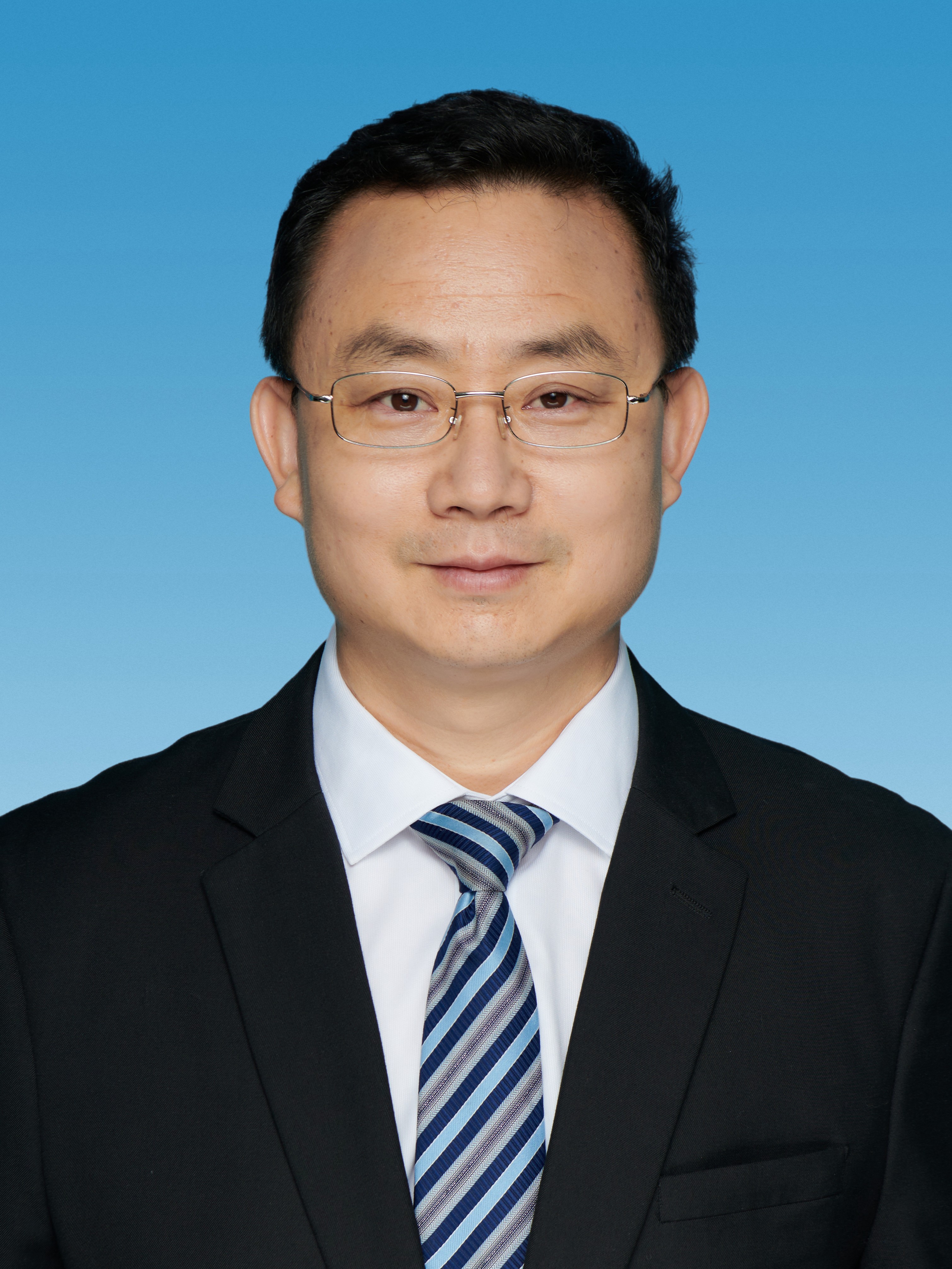
男,1980年生,山东禹城人,中国科学院地理科学与资源研究所教育处处长,研究员,博士生导师。王振波研究员面向城乡均衡发展、美丽中国建设目标,立足人文地理和区域经济学科,对新时期我国城乡融合发展进行了持续深入的研究。在《Nature Cities》《Nature Ecology & Evolution》等国际高水平期刊和国内《地理学报》《中国科学院院刊》等权威CSSCI期刊上发表学术论文162篇,SSCI/SCI收录68篇,CSSCI收录85篇。其中,第一/通讯作者119篇,近五年40篇,出版论著9部。相关研究入选ESI学科全球高被引论文、“国家哲学社会科学成果文库”,“中国百篇最具影响国内学术论文”;获得教育部科技进步奖、环境保护部科学技术奖、华夏建设科学技术奖等省部级奖项6项;入选爱思唯尔2023-2025年全球前2%顶尖科学家、中国知网年高被引学者Top1%(2024、2025)。承担主持和参与国家自然科学基金重大项目、国家社会科学基金重大项目、重点研发计划课题,及部委和地方科研项目99项,其中省部级项目33项;授权国家发明专利4项;发表在《Journal of Cleaner Production》期刊的论文被引560余次(Web of Science引用)。作为主要执笔人撰写并被中央办公厅、国务院办公厅、中国民主同盟中央委员会等采纳的政策咨询报告25篇,其中5份总书记、总理批示,相关成果直接推动了“美丽中国”建设的标准制订和第三方评估的实施,对京杭大运河黄河以北段通航以及水资源的调配等做出一定贡献。
研究领域和方向
主要从事城市与区域规划、城镇化与环境效应研究,侧重于城市群地区城镇化的环境污染效应研究。
主持或参与的科研项目
国家社会科学基金重大项目子课题(2025-2029):国家城乡融合发展试验区实践创新与政策优化研究课题,主持;
国家自然科学基金重点项目子课题(2022-2026):京津冀城市群城镇化中土壤环境质量变化的驱动机制与调控路径,主持;
国家社会科学基金重大项目子课题(2019-2023):新时代社会治理背景下的社会心理服务体系建设研究,主持;
国家自然科学基金面上项目(2018-2021):京津冀城市群高耗能产业对大气环境的影响机理及调控路径,主持;
国家自然科学基金重大项目子课题(2016-2020):特大城市群地区城镇化与生态环境耦合机理及交互胁迫效应,主持;
国家重点研发项目子课题(2016-2020): 京津冀城市群区域协调联动与生态联动保障决策支持系统,主持;
国家社会科学基金重大项目子课题(2013-2015):新型城镇化背景下中国城市发展的空间格局优化研究,主持;
国家自然科学基金重点项目子课题(2013-2015):基于生产要素集聚的中小城镇发展模式研究,主持;
国家自然科学基金青年基金(2013-2015):资源环境约束下的滨湖城市空间增长边界及其优化调控,主持;
国家科技重大专项子课题(2019-2022):高原城镇化进程与绿色发展科学考察,主持;
国土部公益性行业科研专项子课题(2014-2016):城市群尺度国土空间利用质量评价提升技术研究,主持;
安科智慧城市中央研究院委托项目子课题(2014-2018):智慧中国背景下中小城镇发展模式与应用,主持;
交通运输部委托研究项目(2014-2015):城际铁路对京津冀城市群经济发展的影响研究,主持;
交通运输部委托研究项目(2014-2015):城际铁路发展的国际国内经验总结研究,主持;
禹城市人民政府委托项目(2013):禹城市鳌龙水岛国际生态示范区总体规划研究,主持;
禹城市人民政府委托项目(2013):禹城市鳌龙水岛国际生态示范区详细规划研究,共同主持。
代表性论著
1. Li Guangdong, Wang Zhenbo*, Sun Siao, et al. Projected human land-use pressures and natural habitat conversion risk within global terrestrial protected areas. Nature Ecology & Evolution, 2026, 1-12. (Nature子刊)
2. Chen Zihua, Li Xiaowei, Liu Bingzhi, Wang Zhenbo*, et al. Public transport accessibility in villages in and around major Chinese cities. Nature Cities, 2025, 2.8: 749-758.(Nature子刊)
3. Lan Lihua, Wang Zhenbo*, Sun Siao, et al. Spatiotemporal patterns and driving mechanisms of critical soil moisture thresholds in Chinese ecosystems. Ecological Indicators, 2025, 180: 114368. (SCI)
4. Lan Lihua, Wang Zhenbo*, He Fei. Drivers of ecosystem soil water stress response revealed by critical soil moisture thresholds. Ecological Informatics, 2025, 103503. (SCI)
5. Wang Ruohan, Wang Peihan, Zhou Yongkang, Wang Zhenbo*, et al. Association between long-term ambient air pollution exposure and the incidence of breast cancer: A meta-analysis based on updated evidence. Ecotoxicology and Environmental Safety, 2025, 289. (SCI)
6. Wang Zhenbo, Jia Xuechun, Wang Yinan*, et al. Spatial variation of population, density, and composition of mosquitoes in mainland China. Scientific Data, 2025, 12.1: 20. (SCI)
7. Guo Yu, Tong Zihao, Wang Zhenbo* et al. Evolutionary characteristics and influencing mechanisms of green development efficiency in Chinese urban agglomerations: analysis of the Yangtze river Delta urban agglomeration. Journal of Environmental Management, 2025, 375: 124236. (SCI)
8. Chen Zihua, Gao Qian, Li Xiaowei, Wang, Zhenbo*, et al. Beyond inundation: a comprehensive assessment of sea level rise impact on coastal cultural heritage in China. Heritage Science, 2024, 12.1: 1-13. (SCI)
9. Li Xiaoting, Jia Baoquan, Wang Zhenbo*, et al. Residential heat environment in relation to blue-green space sustainability in Beijing, China. Urban Forestry & Urban Greening 102 (2024): 128577. (SCI)
10. Wang Yinan, Nie Juan, Xing Zhenxiang, Wang Zhenbo*, et al. Assessing and mitigating dwelling collapse risk due to extreme precipitation: A comprehensive study using CNN-RF and geodetector. International Journal of Disaster Risk Reduction, 2024, 114: 104918. (SCI)
11. Dong Luo, Liang Longwu, Wang Zhenbo*, et al. Exploration of coupling effects in the Economy–Society–Environment system in urban areas: Case study of the Yangtze River Delta Urban Agglomeration. Ecological Indicators, 2021, 128: 107858. (SCI)
12. Wang Zhenbo, Li Jiaxin, Liang Longwu. Spatio-temporal evolution of ozone pollution and its influencing factors in the Beijing-Tianjin-Hebei Urban Agglomeration. Environmental Pollution, 2020, 256: 113419. (SCI)
13. Wang Zhenbo, Liang Longwu, Sun Zhan, et al. Spatiotemporal differentiation and the factors influencing urbanization and ecological environment synergistic effects within the Beijing-Tianjin-Hebei urban agglomeration. Journal of environmental management, 2019, 243: 227-239. (SCI)
14. Yang Liya, Hu Lingqian, Wang Zhenbo*. The built environment and trip chaining behaviour revisited: The joint effects of the modifiable areal unit problem and tour purpose. Urban Studies, 2019, 56.4: 795-817. (SCI/SSCI)
15. Wang Zhenbo, Fang Chuanglin. Spatial-temporal characteristics and determinants of PM2.5 in the Bohai Rim Urban Agglomeration,Chemosphere,2016,148(april):148-162.(SCI)
16. Wang Zhenbo, FANG Chuanglin, ZHANG Xiaorui. Spatial expansion and potential of construction land use in the Yangtze River Delta,J. Geogr.Sci.,2015,25(7):851-864. (SCI)
17. Wang Zhenbo, Zhang Xiaorui, Xu Bo. Spatio-Temporal Features of China's Urban Fires: An Investigation with Reference to Gross Domestic Product and Humidity,Sustainability, 2015, 7(7):9734-9752. (SCI/SSCI)
18. Wang Zhenbo, Fang Chuanglin, Cheng Shaowen, Wang Jing. Evolution of coordination degree of eco-economic system and early-warning in the Yangtze River Delta,Journal of Geographical Sciences, 2013, 23(1):147-162. (SCI)
19. Wang Zhenbo, Xu Jiangang, Fang Chuanglin, Xu Lu, Qi Yi. The study on county accessibility in China: Characteristics and effects on population agglomeration,Journal of Geographical Sciences, 2011, 21(1):18-34. (SCI)
20. Zhang Xiaorui, Wang Zhenbo* , Lin Jing. GIS Based Measurement and Regulatory Zoning of Urban Ecological Vulnerability,Sustainability, 2015,7(8):9924-9942. (SCI/SSCI)
21. Fang Chuanglin,Wang Zhenbo*. Quantitative Diagnoses and Comprehensive Evaluations of the Rationality of Chinese Urban Development Patterns,Sustainability,2015,7(4):3859-3884. (SCI/SSCI)
22. Zhang Xiaorui,Fang Chuanglin,Wang Zhenbo,Ma Haitao. Urban construction land suitability evaluation based on improved multi-criteria evaluation based on GIS (MCE-GIS): Case of New Hefei City,Chin. Geogra. Sci.,2013,32(12):740-753. (SCI)
23. Wang Jing,Fang Chuanglin,Wang Zhenbo,Advantages and dynamics of urban agglomeration development on Yangtze River Delta,Journal of Geographical Sciences,2012,22(3):521-534. (SCI)
24. FANG Chuanglin, MA Haitao, Wang Zhenbo, Li Guangdong. The sustainable development of innovative cities in China: Comprehensive assessmentand future configuration,Journal of Geographical Sciences,2014,24(6):1095-1114. (SCI)
25. 王圣云,潘柳欣,王振波*.中国区域经济差异时空演变及其多尺度效应[J].地理学报,2025,80(4):1009-1030.
26. 陈慧灵,蒋莉莎,王振波*.黄河流域土地利用碳排放与生态系统服务价值时空耦合及影响因素[J].环境科学,2025,46(6):3536-3545.DOI:10.13227/j.hjkx.202404136.
27. 陈子华,李嘉欣,王振波*.黔东南民族文化生态保护区非物质文化遗产的生态响应和环境秩序[J].地理科学,2024,44(3):502-512.DOI:10.13249/j.cnki.sgs.20221603.
28. 李嘉欣,王振波*.国家级非遗项目空间分布及谱系年代研究[J].地理学报,2022,77(12):3162-3179.
29. 肖渊,高春东,魏颖,王振波*等.关于做好国家高新技术产业开发区“高”和“新”两篇文章的一些思考[J].中国科学院院刊,2021,36(1):86-92.DOI:10.16418/j.issn.1000-3045.20201228003.
30. 王振波,梁龙武,王旭静.中国城市群地区PM2.5时空演变格局及其影响因素[J].地理学报,2019,74(12):2614-2630.
31. 杨励雅,王振波*.城市社区建成环境对居民日常出行行为的影响分析[J].经济地理,2019,39(4):101-108.DOI:10.15957/j.cnki.jjdl.2019.04.013.
32. 王振波,方创琳,许光,潘月鹏,2014年中国城市PM(2.5)浓度的时空变化规律,地理学报, 2015,(11): 1720-1734.
33. 王振波,徐小黎,张蔷.中国城市规模格局的合理性评价,中国人口.资源与环境,2015,25(12): 121-128.
34. 王振波,罗奎,宋洁,徐建斌,2000年以来长江经济带城市职能结构演变特征及战略思考,地理科学进展,2015,(11):1409-1418.
35. 王振波,方创琳,胡瑞山,中国城市规模体系及其空间格局Zipf-PLE模型的评价,地球信息科学学报,2015,(06):682-688.
36. 王振波,张蔷,张晓瑞.基于资源环境承载力的合肥市增长边界划定,地理研究,2013,32(12): 2302-2311.
37. 王振波,方创琳,王婧,城乡建设用地增减挂钩政策观察与思考,中国人口资源与环境,2012, (01): 96-102.
38. 王振波,方创琳,徐建刚.淮河流域空间开发区划研究,地理研究,2012,(08):1387-1398.
39. 王振波,方创琳,王婧,1991年以来长三角快速城市化地区生态经济系统协调度评价及其空间演化模式,地理学报,2011,(12):1657-1668.
40. 王振波, 徐建刚, 朱传耿等.中国县域可达性区域划分及其与人口分布的关系. 地理学报, 2010,65(4):416-426.
41. 王振波,朱传耿. 中国就业的空间模式及区域划分. 地理学报, 2007, 62(2): 191-199.
招生专业:人文地理学
招生方向:城镇化与环境效应
联系方式:wangzb@igsnrr.ac.cn
更新日期:2026年5月28日




 在线留言
在线留言 联系我们
联系我们 所长信箱
所长信箱